Payment of management employees of SOEs
2002-08-23 of the Government of the Republic of Lithuania Resolution No. 1341 “Regarding the salary of managers of state-owned enterprises” list of summary editions by date
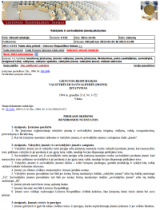
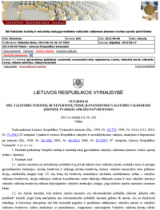
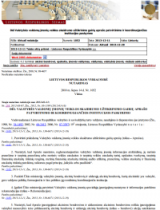
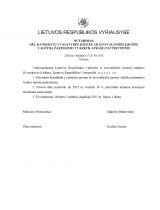
The form of information disclosure for MOEs has been approved
Recommendations for institutions
Recommendations for companies
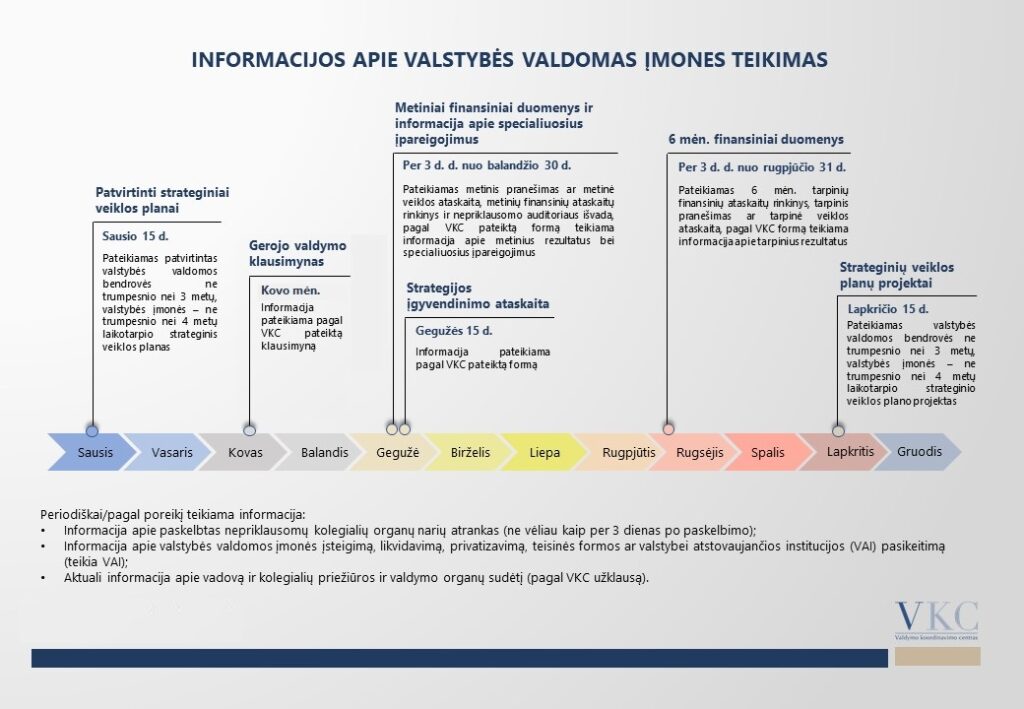
VKC calendar of information provision
Sustainability in State-Owned Enterprises
The issue of sustainability — and particularly sustainability reporting — is important for both private and state (including municipal) enterprises. Corporate sustainability reporting is regulated by the European Commission: under the EU Corporate Sustainability Reporting Directive (CSRD), companies are required to comply with the specified requirements and prepare sustainability reports.
The specific reporting obligations depend on the size of the company and whether its shares are listed on stock exchanges. Detailed information on which company sizes are required to prepare sustainability (ESG) reports and from which dates this obligation applies under the CSRD can be found in the tables below.
State‑Owned Enterprises and Sustainability
The relevance of sustainability topics is also reflected in OECD publications. In September 2025, the OECD released a report detailing the role of state-owned (SOEs) and municipally owned enterprises (MOEs) in the field of sustainability. The main message of this publication is that SOEs should demonstrate leadership in global markets not only in good governance, but also in sustainability practices.
State-owned enterprises are among the key players in the global economy — according to the latest data, they account for 126 of the world’s 500 largest companies by revenue and 12% of total market capitalization. These enterprises are significant not only because of their size but also because of their sectoral concentration: they often operate in strategic and greenhouse gas-intensive sectors, such as energy, transport, utilities, and heavy industry.
Recognizing the importance of SOEs in the global economy, in 2024 the OECD updated its Guidelines on Corporate Governance of State-Owned Enterprises, incorporating a new chapter on sustainability, which provides targeted recommendations primarily for state ownership entities and, where relevant, SOE boards.
The new recommendations are structured around four main pillars:
The state’s role as owner in setting ambitious and specific sustainability expectations.
The role and responsibility of SOE boards in implementing these expectations and integrating sustainability into strategies and operations.
Sustainability reporting and disclosure, ensuring transparency and reliability in alignment with international standards.
Responsible business conduct and stakeholder engagement, including the promotion of high standards of integrity.
More detailed insights on each of these areas can be found in the OECD report, which elaborates on the state’s ownership role, the importance and accountability of SOE boards, details of sustainability reporting, and the principles of sustainable business conduct.
Corruption prevention in companies – where to start?
Corruption is perhaps the most sensitive issue in the public sector and at state and municipality-owned enterprises. There are consistent doubts as to whether the enterprises operate transparently and whether they take all necessary steps to ensure that the company operates in accordance with the best standards in the field. In order not only to prevent corruption manifestations, but to prevent the doubts from arising through choosing the right objectives, it is necessary to invoke the best practices in the area and be intolerant when it comes to corruption manifestations.
For advice, we recommend that you contact the professionals in the field, i.e. the Special Investigation Service. We are also ready to help. If you have any questions, please email or give us a call.
We have enclosed the Anti-Corruption Guide designed for the companies by the Special Investigation Service.
The relevance of this matter is also appreciated in the OECD publications. Back in August 2018, the organization published a report on State-Owned Enterprises and Corruption (State-Owned Enterprises and Corruption). This publication addresses the key corruption manifestation risks for SOEs, gives an overview of anti-corruption instruments, and provides guidelines for the state ownership function, i.e. recommendations for what the state can and should do as an active and informed owner. The publication is available in English.
State-Owned Enterprises and Corruption
Corruption is the antithesis of good governance, and it is a direct threat to the purpose of state ownership. This report brings a comprehensive set of facts and figures to the discussion about the corruption risks facing state-owned enterprises (SOEs).
SOE corruption prevention policies
Advanced enterprises clearly and unambiguously declare that they have a zero-tolerance policy towards corruption. Here are a few examples of what kind of corruption prevention policies have been introduced by SOEs.
Please note that corruption prevention does not end with a published document. On the contrary, corruption prevention also involves practical arrangements for anonymous notifications of corruption manifestations to be made as well as clearly declared and respected practices at all levels of corporate governance.
OECD recommendations
Other recommendations
Reports by National Audit Office of Lithuania
Publications by World Bank
Publications by Baltic Institute of Corporate Governance
Practical information for companies
VKC good practice events and other slides
Video recordings
Frequently asked questions
What is the Governance Coordination Centre (VKC) and what is its purpose?
The Governance Coordination Centre (VKC) is an analytical and good governance implementation centre established by the Government, aimed at ensuring consistent and professional management of state-owned enterprises (SOEs). The Centre’s functions cover a wide range of SOE coordination activities: selection of independent board members, supervision of the implementation of strategic plans, preparation of analytical reports and publication of SOE performance, support in shaping SOE sector policy, and consultations on the implementation of good governance practices. VKC also represents Lithuania in the OECD Working Party on State Ownership and Privatisation Practices. The sole owner of the Public Institution Governance Coordination Centre is the State.
More information can be found here: About Us.
What is the Good Governance Index?
The purpose of the SOE Good Governance Index is to assess and measure how state-owned enterprises (SOEs) and the state institutions representing them implement key good governance practices, which include the recommendations of the Organisation for Economic Co-operation and Development (OECD), the provisions of the Ownership Guidelines, Transparency Guidelines, and Nomination Guidelines, as well as other documents regulating SOE activities and global best practices. Currently, it is the only tool used to evaluate the governance quality and compliance with legal requirements of all SOEs and their subsidiaries.
More information can be found here: Governance Index.
What are Collegial Bodies?
Collegial supervisory or management bodies (collegial bodies) are considered one of the most important elements of effective governance in state-owned enterprises (SOEs). Particular attention is given in global SOE governance standards to the composition and operating principles of these bodies.
More information about them can be found here: Collegial Bodies.
Where can I find information about announced selections?
More information can be found here: Member Selection.
Where can I find the reports prepared by GCC?
More information can be found here: GCC publications.
How to contact GCC?
Contacts:
-
Email: info@governance.lt
-
Phone: +370 620 73679
-
More contacts: link to Structure and Contacts